
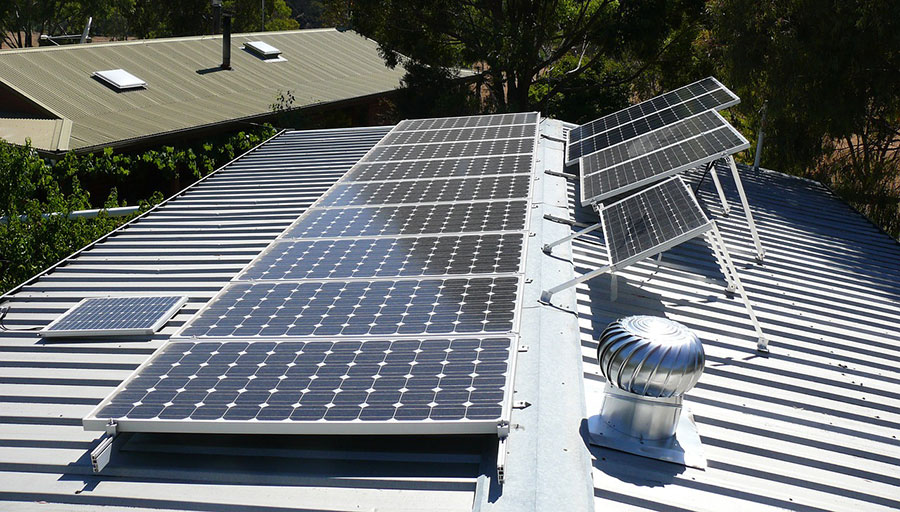
Renewable energy is a socially and politically defined category of energy sources. Renewable energy is generally defined as energy that comes from resources which are continually replenished on a human timescale such as sunlight, wind, rain, tides, waves, geothermal heat and….
Prior to the development of coal in the mid 19th century, nearly all energy used was renewable. Almost without a doubt the oldest known use of renewable energy, in the form of traditional biomass to fuel fires, dates from 790,000 years ago.
Probably the second oldest usage of renewable energy is harnessing the wind in order to drive ships over water. This practice can be traced back some 7000 years, to ships on the Nile.
By 1873, concerns of running out of coal prompted experiments with using solar energy. Development of solar engines continued until the outbreak of World War I. The importance of solar energy was recognized in a 1911 Scientific American article: “in the far distant future, natural fuels having been exhausted [solar power] will remain as the only means of existence of the human race”.
The theory of peak oil was published in 1956. In the 1970s environmentalists promoted the development of renewable energy both as a replacement for the eventual depletion of oil, as well as for an escape from dependence on oil, and the first electricity generating wind turbines appeared. Solar had long been used for heating and cooling, but solar panels were too costly to build solar farms until 1980. According to the OECD Factbook 2011-2012, for all OECD countries taken as a whole, the contribution of renewables to total energy supply increased from 4.8% in 1971 to 7.6% in 2010. In general, the contribution of renewables to the energy supply in non-OECD countries is higher than in developed OECD countries. With the world average(including OECD countries and non-OECD countries) percentage of total energy supplied from renewable energy at 13% in 2010
According to the OECD Factbook 2011-2012, for all OECD countries taken as a whole, the contribution of renewables to total energy supply increased from 4.8% in 1971 to 7.6% in 2010. In general, the contribution of renewables to the energy supply in non-OECD countries is higher than in developed OECD countries. With the world average(including OECD countries and non-OECD countries) percentage of total energy supplied from renewable energy at 13% in 2010.